
Time to Retire?

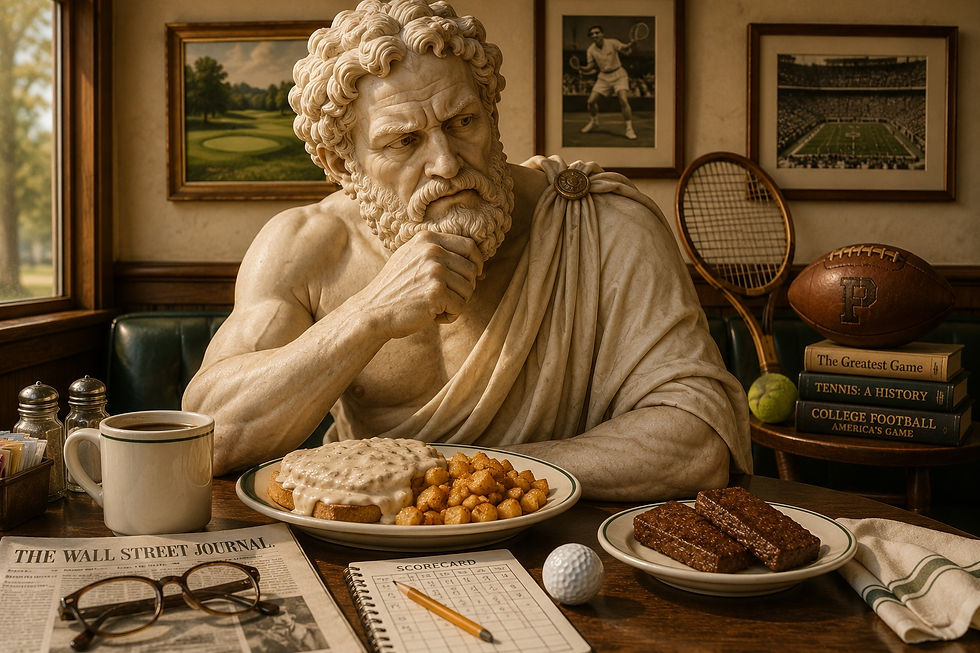
At breakfast the other morning, we got onto one of those subjects that is particularly appropriate for a group of men our age: retirement. More specifically, when you should do it and what on earth you're supposed to do once you do.
The retirement age seems to have changed considerably since we were working. When we were young, 65 was considered the normal retirement age, and many of us worked well into our 70s. Now, apparently, some people are being shown the door much earlier. A recent Wall Street Journal article about major law firms noted that more and more large firms are encouraging partners to retire in their late 50s, presumably to make room for younger partners coming up behind them. Large accounting firms have long had mandatory retirement ages around 60. Of course, that raises the obvious question: What do you do afterward? And will your bucket list last long enough? Of course none of us retired at 55 or 60. Instead, we worked into our 70s. Even then, we all moved on to other things such as volunteer work, charitable boards, and even paid work. Even those things, however, eventually run their course. And for those who give up careers at 55 or 60, we all agree that they either need a really really big bucket list or a new career or both.
Which got us thinking about another group that may have an equally difficult time knowing when to quit: professional athletes.
When Is It Time to Hang It Up?
When I saw Novak Djokovic lose in the first round of the U.S. Open and then saw the Williams sisters knocked out early, I wondered whether professional athletes need retirement counseling.
Just like the big law firms, these athletes are occupying slots that could go to younger players coming up behind them. Maybe they should retire. Of course, it's a lot easier to say that about somebody else.
Speaking of Things to Do When You Retire…
Our conversation then turned to television and streaming. For most of us, our first exposure to television was in the form of a tiny screen and a big wooden piece of furniture that was full of wires and tubes. You had a choice of about three different TV stations and you watched them in black and white. You usually found something that the whole family watched together, maybe because it was a whole new and unique experience. Then came color TV. Then came cable. Then they got rid of the tubes and used chips. That allowed much bigger screens and better color. Cable TV undermined the big three channels by offering very segmented programming like sports (any sport you wanted could be found somewhere on cable) and food shows. Then came streaming. The problem for all of us at the table is not a lack of content or choices; it is the lack of high quality programs. The other big problem is that all the streaming sites charge their own monthly fees and the cost keeps going up despite the addition of commercials appearing frequently. The absence of commercials on streaming networks was part of their original appeal. The future of traditional networks and cable is pretty murky unless they make some bold changes in both quality and eliminating commercials or at least limiting commercials. Once the streaming networks begin showing more sports and political content, it’s going to be hard for cable and traditional broadcast television to survive if they don’t make some dramatic changes. Right now they seem to be mostly focused on content; they really should focus more on the fact that people do not want endless commercials. At least that’s the consensus in our small sample of old folks.
Which brings us back to where we started: retirement.
Perhaps the real trick isn't knowing when to retire. Maybe it's knowing what you're going to do the morning after you do. And fortunately, breakfast is still available.
☕ Pull Up a Chair
The conversation doesn't end here.
Join us by sharing your thoughts in the comments below. We'd love to have you at the table.
Enjoying the conversation? Subscribe below to be notified when new posts are published.
Comments